Gingerbread House Embroidery Paper: A Designer’s Review
As an embroidery designer who has spent years translating digital concepts into tangible, stitched realities, I approach every new asset with a critical eye. It is not enough for a design to look pretty on a screen; it must hold up under the needle, survive the wash cycle, and elevate the brand it represents. Recently, I evaluated Gingerbread House Embroidery Paper from Anemona Estudio, specifically looking at its potential for small business merchandise and branded patch applications. While the product description categorizes it as a digital paper within the Patterns and Graphics sectors, my focus was strictly on how this visual asset translates into real-world commercial embroidery projects.
First Impressions: Visual Personality and Brand Fit
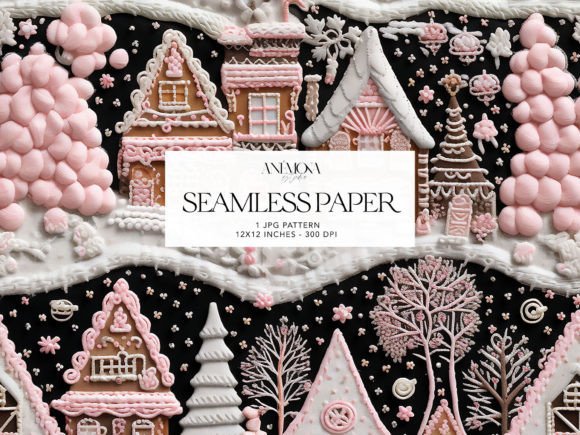
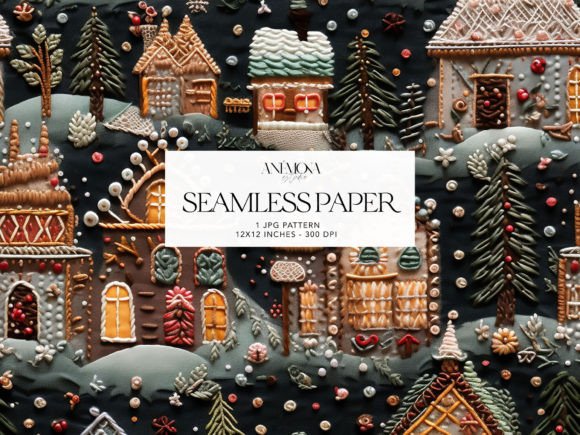
The immediate impression of Gingerbread House Embroidery Paper is one of warmth and nostalgia. The title alone suggests a cozy, inviting aesthetic that aligns perfectly with businesses aiming for a handmade, artisanal feel. For boutique owners, bakeries, or creative studios, this visual language communicates comfort and tradition. However, from a technical standpoint, we must look beyond the surface charm. The file provided is a high-resolution JPG at 300 dpi, measuring 3600px by 12 inches. This resolution is crucial for creating clear printable mockups and reference images, but it is vital to remember that this is a raster image, not a vector or a native machine embroidery design file.
This distinction matters immensely for brand identity. If you are using this graphic as a reference for digitizing a custom embroidered patch, the clarity of the source image allows for precise interpretation of shapes and colors. The seamless nature of the pattern means it can be tiled for larger applications, such as all-over prints on tote bags or lining fabrics, offering versatility beyond simple logo placement.
Real-World Applications for Small Business Merch
When considering Gingerbread House Embroidery Paper for small business merch, the possibilities extend far beyond simple decoration. Imagine a local café wanting to create staff uniforms that stand out. Using this gingerbread motif as a chest logo accent on aprons can create a cohesive and charming team look. The rustic, playful vibe enhances customer trust by reinforcing the idea of a homegrown, quality-focused establishment.
For Etsy sellers and crafters, this graphic serves as an excellent foundation for creating unique product labels or packaging accents. You can use the high-resolution JPG to print custom tags that mimic the look of embroidery, adding a premium touch to handmade products without the cost of actual stitching. Alternatively, if you have the skills to digitize the image, it can become a standout feature on caps or tote bags. The key is to adapt the intricate details of the gingerbread house into a format that works with thread.
In the realm of custom apparel, this design could work beautifully as a sleeve detail on holiday-themed sweatshirts or as a pocket emblem on work shirts for florists and pet brands. The visual consistency it offers helps in building recognition, making your brand instantly identifiable to repeat customers. Whether used for event merch or as a customer gift, the emotional connection fostered by such a warm design can significantly boost buyer engagement.
Technical Considerations and Production Challenges
While the aesthetic appeal is strong, there are critical technical factors to address before putting this design into production. Since Gingerbread House Embroidery Paper is a digital graphic and not a pre-digitized embroidery file, you will need to convert it or use it as a reference for manual digitizing. This process requires careful attention to stitch density. Gingerbread houses often feature detailed outlines, icing decorations, and textured roofs. If these details are too fine, they may not stitch out cleanly on smaller patches or curved surfaces like cap fronts.
I recommend testing the design in black and white first to check for contrast and clarity. This step helps identify areas where thread colors might blend together, losing the definition of the house structure. Additionally, consider the fabric texture. Heavy textures can obscure small details, so simpler versions of the design may be necessary for rougher materials like canvas tote bags or wool coats. Always confirm the hoop size available on your machine before finalizing the scale of the design. A 12-inch source image gives you flexibility, but shrinking it down for a small chest logo requires simplifying the elements to prevent thread breaks and puckering.
Another crucial aspect is the choice of stabilizer. For items that undergo frequent washing, such as aprons and uniforms, using a cut-away stabilizer is essential to maintain the integrity of the embroidery over time. Without proper stabilization, the weight of the thread can distort the fabric, ruining the professional look of the finished product.
Enhancing Brand Identity Through Thoughtful Design
Integrating Gingerbread House Embroidery Paper into your brand assets is about more than just adding a cute image; it is about strategic communication. A well-executed embroidered patch signals quality and attention to detail. When customers see consistent, high-quality embroidery on your merchandise, it reinforces the perception of your brand as professional and trustworthy. This is particularly important for handmade product lines where the perceived value is closely tied to the craftsmanship displayed.
Use this design to create a narrative around your brand. If you are a bakery, the gingerbread house evokes memories of family traditions and homemade goodness. If you are a creative studio, it suggests whimsy and artistic flair. By aligning the visual personality of the embroidery with your core brand values, you create a deeper emotional resonance with your audience. This consistency across various touchpoints—from website graphics to physical merchandise—strengthens brand recognition and loyalty.
Practical Designer Notes for Implementation
Before committing to a large production run, follow these practical steps to ensure success:
- Create a Mockup: Use the high-resolution JPG to create a realistic printable mockup for client approval. This helps visualize how the design will look on different garments and accessories.
- Check Licensing: Although Anemona Estudio provides this as a digital paper, always confirm commercial licensing terms before using it for products you intend to sell. Ensure you have the right to use the graphic for commercial embroidery projects.
- Test on Real Fabric: Never rely solely on screen previews. Stitch a sample on the actual fabric you plan to use. Check for thread color contrast and adjust shades if necessary to ensure the design pops.
- Simplify for Small Sizes: If using on small patches or cap fronts, remove non-essential details. Focus on the silhouette of the house and key decorative elements to maintain clarity.
- Compare Assets: Place this design beside your other brand assets to ensure visual harmony. It should complement, not clash with, your existing logo and color palette.
In conclusion, Gingerbread House Embroidery Paper is a versatile asset that, when handled with technical precision, can significantly enhance your small business merchandise. It bridges the gap between digital convenience and tactile quality, offering a pathway to creating memorable, high-value embroidered goods. By respecting the limitations of the medium and leveraging the strengths of the design, you can create products that not only look beautiful but also serve as powerful tools for brand building.