Reviewing Embroidery Christmas Scene for Craft Fairs
As an experienced embroidery designer who has spent countless weekends behind a booth table, I know that the difference between a browser and a buyer often comes down to visual impact. When I first encountered the Embroidery Christmas Scene, my immediate thought was not just about aesthetics, but about viability. In the high-stakes environment of a holiday market, your products need to scream "gift" from three feet away. This review breaks down how this specific asset performs when translated from a digital concept into a tangible, sellable handmade product.
First Impressions and Visual Appeal
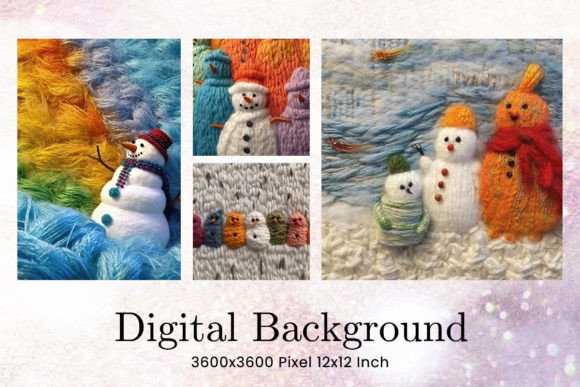
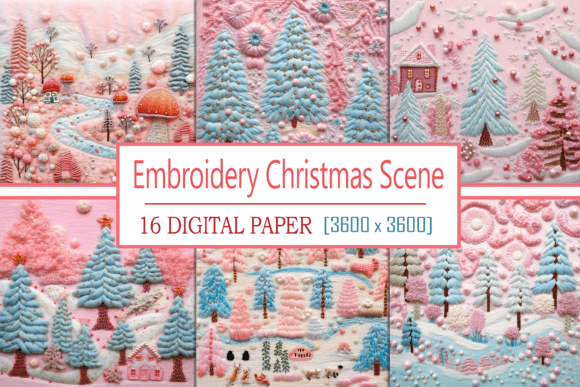
The title alone suggests a narrative quality. A "scene" implies more than a simple icon; it suggests depth, storytelling, and atmosphere. For craft fair sellers, this is crucial. Customers are drawn to items that evoke emotion, and a well-composed Christmas scene can trigger nostalgia or festive joy instantly. The description notes that this is part of a collection of Backgrounds and Graphics, specifically offering 16 HD images in PNG format at 300 DPI. While these are not vector files or native embroidery formats, their high resolution (3600 px x 3600 px) makes them exceptional reference materials or sublimation assets.
Visually, I imagine this design leaning towards a decorative, perhaps slightly rustic or traditional aesthetic, given the "scene" descriptor. It likely features elements like snow-covered cottages, winter flora, or classic holiday motifs. For a boutique maker, this offers a premium feel. It does not look like a quick clip-art slap-on; it looks like a curated piece of art. This perception of quality allows you to price your finished product higher, as customers perceive greater artistic value.
Translating Digital Graphics to Stitched Goods
Here is where the practical reality of embroidery meets digital assets. Since the Embroidery Christmas Scene is provided as a high-quality PNG, it is not a ready-to-stitch machine embroidery design. However, for the creative entrepreneur, this is an opportunity. You can use these images as the basis for creating custom digitized files, or use them for sublimation on polyester blends if you offer mixed-media items. If you are digitizing this yourself, pay close attention to the details.
For products like tote bag design applications, a complex scene needs careful simplification. If you attempt to stitch every pixel of a 3600 px image, you will run into issues with stitch density and production time. Instead, use the PNG as a visual guide to create a simplified embroidery file that captures the essence of the scene without the bulk. This ensures the design remains flexible and durable.
Best Product Applications
- Tea Towel Embroidery: A horizontal scene works beautifully along the hem of a linen tea towel. It adds a touch of elegance without overwhelming the fabric.
- Apron Embroidery: Placing a focal point from the scene on the bib of a canvas apron creates a charming, giftable item for home cooks.
- Embroidered Patch: If the scene is compact, it can be scaled down for a patch. Patches are low-commitment purchases for customers and great add-ons at checkout.
- Pillow Covers: A larger version of the scene can serve as the centerpiece for a holiday pillow cover, appealing to buyers looking for home decor updates.
For Etsy seller audiences, these designs also serve as excellent printable mockup bases. You can overlay your stitched samples onto these high-resolution backgrounds to create cohesive social media content that highlights your small shop product in a professional light.
Production Practicalities and Careful-Use Notes
When preparing for a weekend craft fair, efficiency is key. You cannot spend hours hooping and stitching a single item if you want to maintain inventory levels. The Embroidery Christmas Scene must be evaluated for its production feasibility. If the original graphic is dense, your digitized version must account for thread colors and jump stitches.
Be cautious with tiny details. In a busy scene, small elements can get lost in the fabric texture or break during washing. I recommend testing the design on scrap fabric first. Check how the stabilizer interacts with the chosen material. For textured towels, you may need a cut-away stabilizer to prevent puckering, whereas woven cotton for tote bags might handle a tear-away better.
Another critical factor is hoop size. Ensure the scene fits within your standard hoop dimensions without requiring excessive re-hooping, which slows down batch production. If the design is large, consider breaking it into smaller, complementary motifs that can be stitched separately and assembled, or sold as a set.
Material Considerations
Dark fabric can mute the vibrancy of certain thread colors. If the Embroidery Christmas Scene relies on subtle shading, test it on both light and dark fabrics. You may need to adjust the thread palette to ensure contrast. For curved surfaces like caps, a complex scene may distort. In such cases, simplify the design to its most recognizable elements to maintain clarity.
Boosting Brand Consistency and Buyer Engagement
Using a cohesive set of images like the 16 provided in this pack helps build brand consistency. If you use similar color palettes and themes across your craft fair product line, your booth looks curated and professional. This visual harmony draws customers in and encourages them to browse longer.
Furthermore, high-quality design assets allow you to create better marketing materials. Use the PNGs to create digital invitations, social media posts, or packaging inserts. This extends the value of the purchase beyond just the physical item. For commercial embroidery businesses, having a library of such scenes allows for rapid prototyping of new seasonal lines.
Final Verdict for the Handmade Market
The Embroidery Christmas Scene is a strong contender for holiday collections, provided you approach it with a strategist’s mind. It is not just a picture; it is a foundation for storytelling through stitch. By carefully selecting which elements to embroider and which to leave as negative space, you can create products that stand out in a crowded market.
Remember to verify the licensing terms for commercial use before selling finished products derived from these graphics. While the high resolution and PNG format offer flexibility, they require an extra step of digitization or adaptation for true embroidery application. Test your stitch-outs, refine your tension, and ensure your fabric texture complements the design. With these steps, this asset can become a cornerstone of your holiday sales, driving engagement and boosting your perceived value as a skilled artisan.
Ultimately, success at a craft fair is about connection. A well-executed Christmas scene connects the buyer to the warmth of the season. Use this design to tell that story, one stitch at a time.